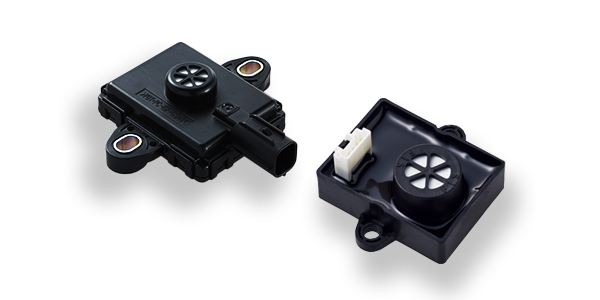
- Quick Start up &
Response - Start-up in 1second,
Response in 3seconds
- Quick Start up &
- High Hydrogen Selectivity
- Prevents false detection from other gases
- High Durability
- Long catalyst life by structural design
Variety of Our Products
| Part No. | FH2-HY04 | FH2-HY05 | FH2-HY06 | FH2-HY11 | FH2-HY11-HC *with connector cable | |
|---|---|---|---|---|---|---|
| Spec. | Detection Range (In air ) | 0 〜 4 vol.% | 0 〜 4 vol.% | 0 〜 4 vol.% | 0 〜 4 vol.% | 0 〜 4 vol.% |
| Start-up Time | ≦ 1 sec | ≦ 1 sec *output conc. Data 3 sec later after power on. | ≦ 1 sec | ≦ 1 sec | ≦ 1 sec | |
| Response Speed (T90) | ≦ 3 sec | ≦ 3 sec | ≦ 3 sec | ≦ 3 sec | ≦ 3 sec | |
| Supply Voltage | 12 V (9 〜 16 V) DC | 12 V (8 ~ 16 V) DC | 24 V (16 ~ 32 V) DC | 5 V (4.75 ~ 5.25 V) DC | 5 V (4.75 ~ 5.25 V) DC | |
| Output Signal | PWM (10〜90 % duty) Negative logic | CAN (Standard format) Baud rate: 500 kbps | CAN (Expansion format) Baud rate:250 / 500 kbps | Analog 0.5 V ~ 4.5 V DC | Analog 0.5 V ~ 4.5 V DC | |
| Usage | Passenger Cars, Buses, Trucks | Residential, Evaluation, Research, Industrial Power Storage Devices | ||||


Features
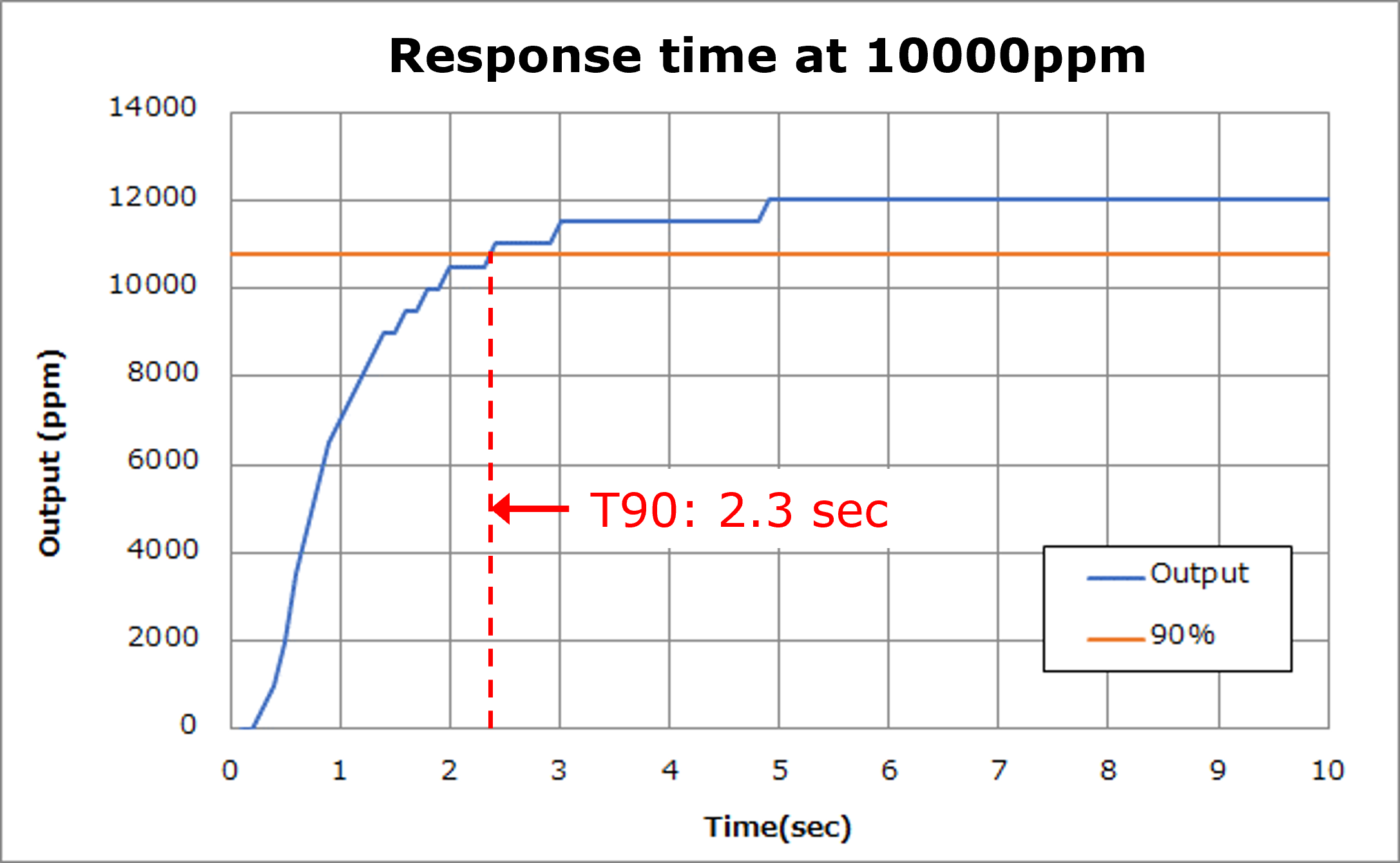
Quick start up & response
Start up time in 1 sec. after power-on and response speed within 3 sec. have been achieved. In case a hydrogen leak occures during parking, there is a possibility of explosion when the battery is turned on. To avoid this danger, hydrogen leak must be detected within 3 sec. after ignition switch gets powered on. Nissha’s hydrogen sensors start response within 3 sec. and satisfy the requirements from automobile industries.
High Hydrogen Selectivity
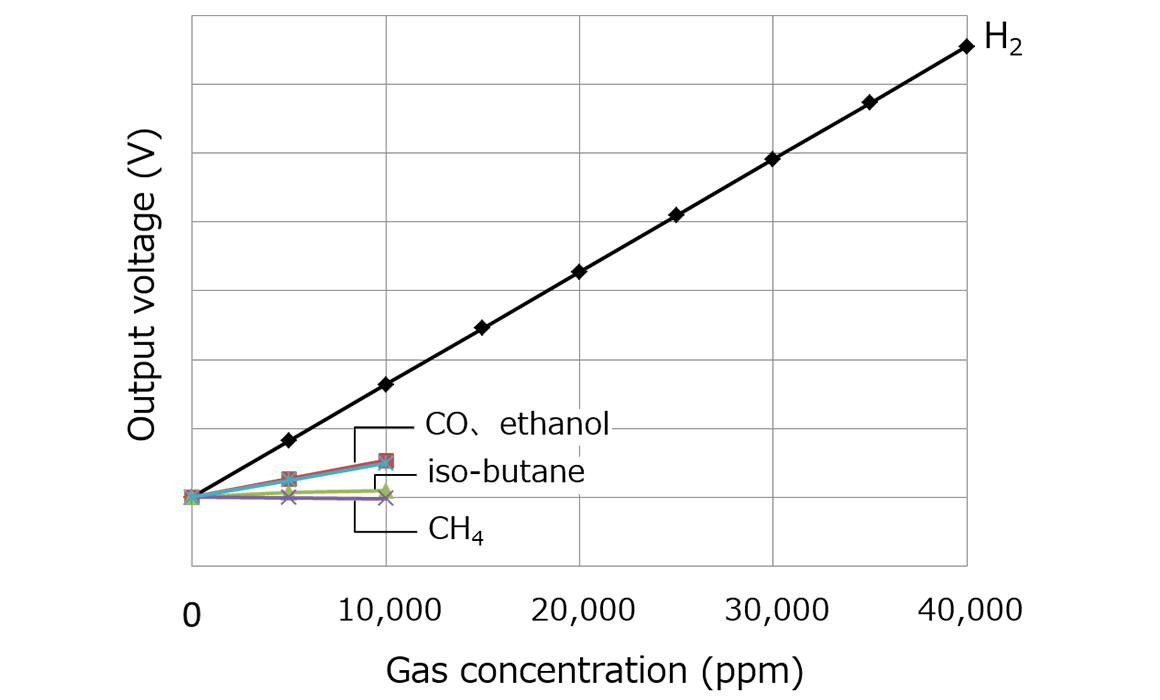
We provide the sensors that excel in gas sensitivity and no occurance of mis-detecting other gases.
Our hydrogen sensors show stable performance, and are not influenced by other gases (ethanol, methane, etc.) that could be generated in an operating environment.
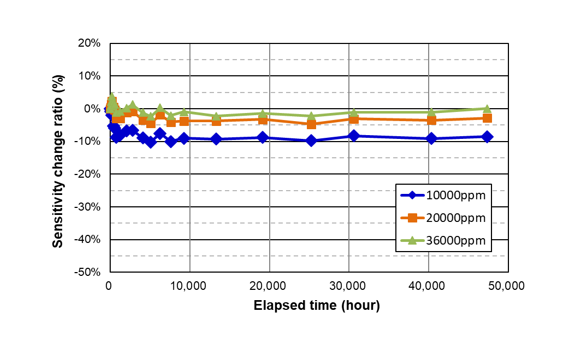
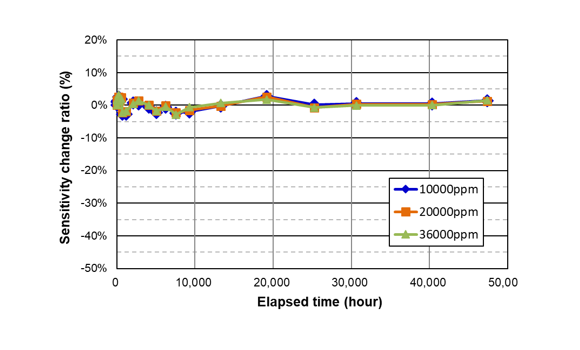
High durability that satisfies the strict in-vehicle requirements
Our sensors realize the stability that clears various in-vehicle standards.
Unpowered operation
Our sensors provide the safety and relief
for fuel cell applications
Nissha’s catalytic combustion type hydrogen sensors are the world's first sensors, which were installed in actual fuel cell vehicles for the detection of hydrogen gas.Hydrogen technology contributes to the safety and prevention of global warming.
What is Hydrogen?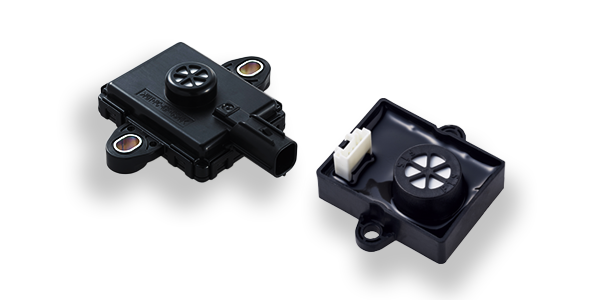
Catalytic combustion type sensors with high durability and quick response speed
Our hydrogen sensors are catalytic combustion type.
General catalytic combustion type sensors has a housing that covers heater with inorganic material (career), which contains catalytic that detects hydrogen. We developed a catalytic combustion type hydrogen sensor with a unique design, which is different from general sensors.
Our sensors achieved "quick start-up, response speed & high durability, against siloxane poisoning, ".
What is Hydrogen Sensor ? (Catalytic Combustion Type)Proven Track Record and Applications
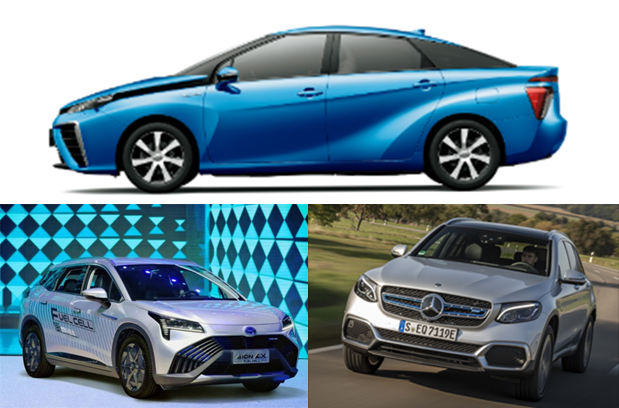
Passenger cars・Commercial vehicles
We provide hydrogen sensors that are compatible with CAN (Controller Area Network).12V hydrogen sensor is suitable for passenger cars. Our sensors have been used by TOYOTA (Mirai), Mercedes-Benz etc.
Buses and trucks
We provide 24V hydrogen sensors for large-sized motor vehicles. Nissha has supplied these sensors to bus manufacturers in China and Europe.

Hydrogen energy systems
We contribute to the widespread adoption of hydrogen energy systems, including fuel cells for backup power and water electrolysis equipment.
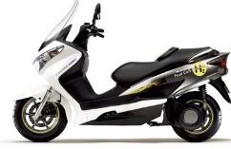
Others (Mobile applications ・ Industrial vehicles)
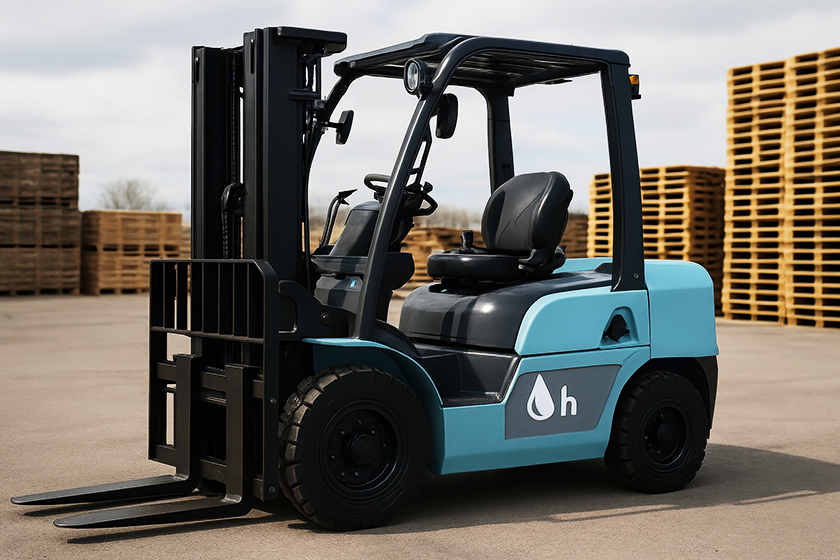
Our products are used across a wide range of fields including railways, ships, and forklifts.
Railways 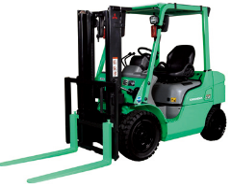
Ships 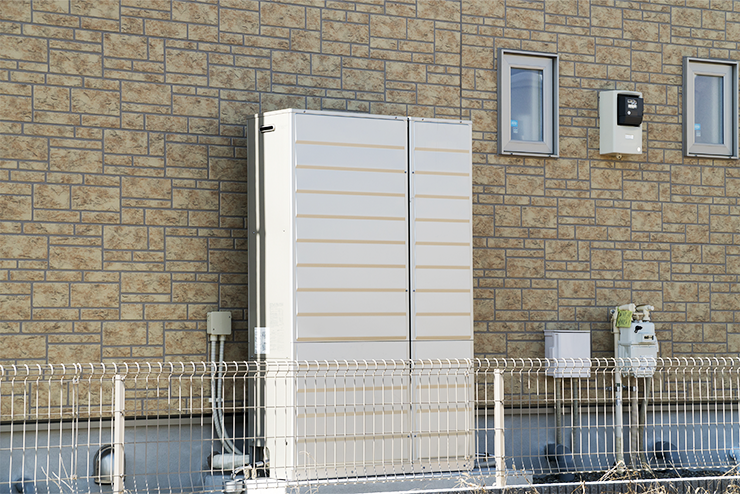
Forklifts