Nissha FIS Technology
Gas Sensors with Low-Concentration Detection Capability
- What is a Semiconductor Gas Sensor?
- A semiconductor gas sensor detects gases by utilizing redox reactions that occur when a metal-oxide
semiconductor is heated.
These sensors offer exceptionally high sensitivity, making them suitable for measuring gases at ppm-level concentrations. Compared to other types of gas sensors, they are compact, long-lasting, and cost-effective—providing greater design flexibility for integration into a wide range of equipment and systems.
Sensing material structure is different between SB and SP types.
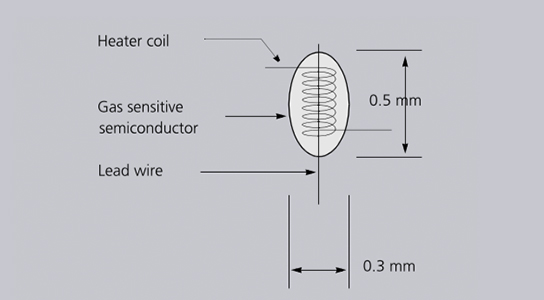
SB Type
SB (Semiconductor Bead) type sensing element is a mini bead type semiconductor mainly composed of tin-dioxide (SnO2). A heater coil and an electrode wire are embedded in the element. This structure realizes large reduction of power consumption and quick response.
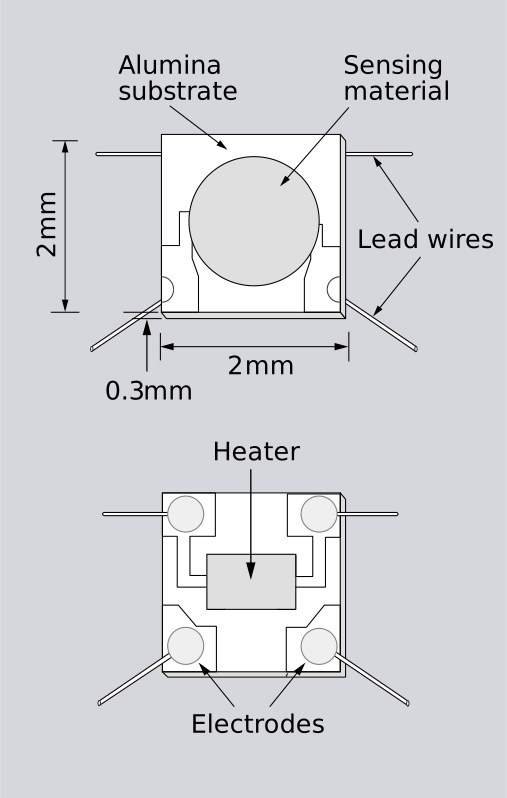
SP Type
SP (Semiconductor Plate) type sensing element is formed on the alumina substrate on which the gold electrodes are printed. A thick film heater of ruthenium-oxide or platinum is printed on the reverse of the substrate. Variations of sensing materials and its thickness controllability have led to improvements in sensor performance and wide variation in the product range.
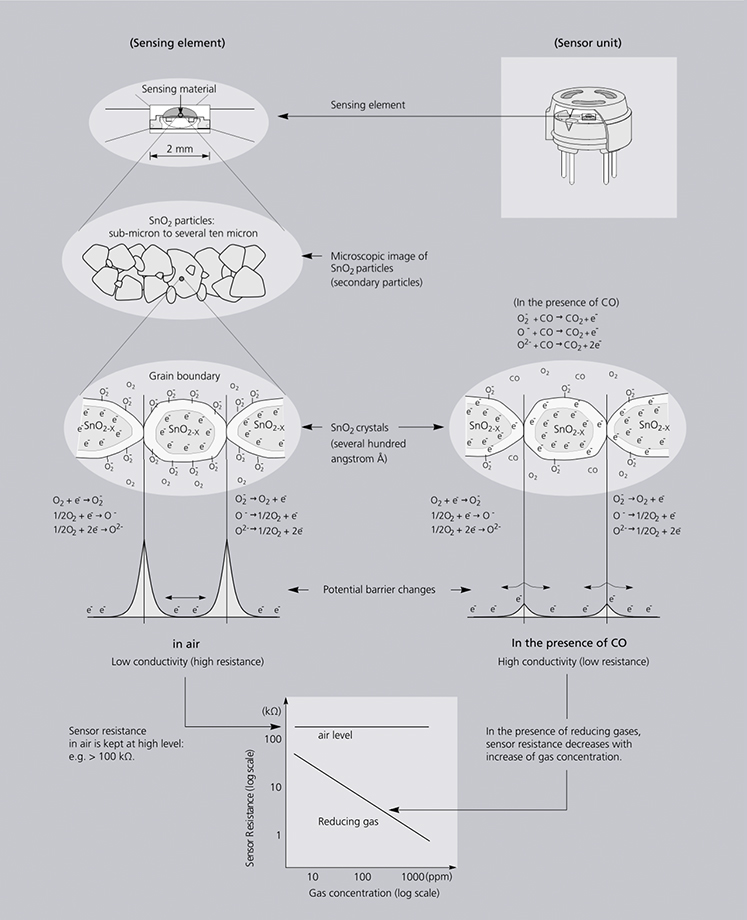
The conductivity of tin dioxide (SnO22) metal oxide semiconductor materials changes according to gas concentration changes.
This is caused by adsorption/desorption of oxygen and reaction between surface oxygen and gases. These reactions cause a dynamic change of electric potential on SnO2 crystal and results in the decrease of sensor resistance under the presence of reducing gases such as CO, methane, hydrogen.
Durable, Fast-Response Catalytic Combustion Type Gas Sensors
- What is a Catalytic Combustion Type Gas Sensor?
- A Catalytic Combustion Type Gas Sensor detects gases by measuring changes in platinum resistance caused by temperature rise during gas combustion. Compared to semiconductor gas sensors, it is less affected by temperature and humidity and is ideal for detecting high gas concentrations of 10,000 ppm or more.
At Nissha FIS, we have developed proprietary sensor structures that deliver high gas selectivity and exceptional accuracy. This technology is implemented in hydrogen detectors for fuel cell vehicles.
Nissha FIS's Unique Catalytic Combustion Type Gas Sensor
Conventional Catalytic Combustion Type Gas Sensors have a structure where the heater is surrounded by an inorganic carrier mixed with a catalyst that reacts with hydrogen.
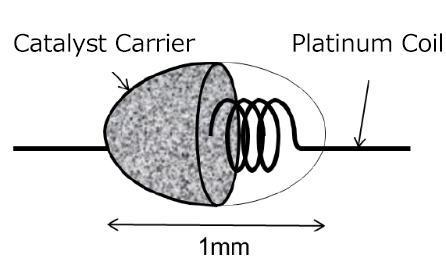
Conventional Catalytic Combustion Gas Sensors tend to face challenges with startup time, response speed, and resistance to siloxane poisoning.
Nissha FIS's Catalytic Combustion Type Gass Sensors have overcome these issues by forming a three-dimensional catalyst structure directly on the surface of a platinum coil.
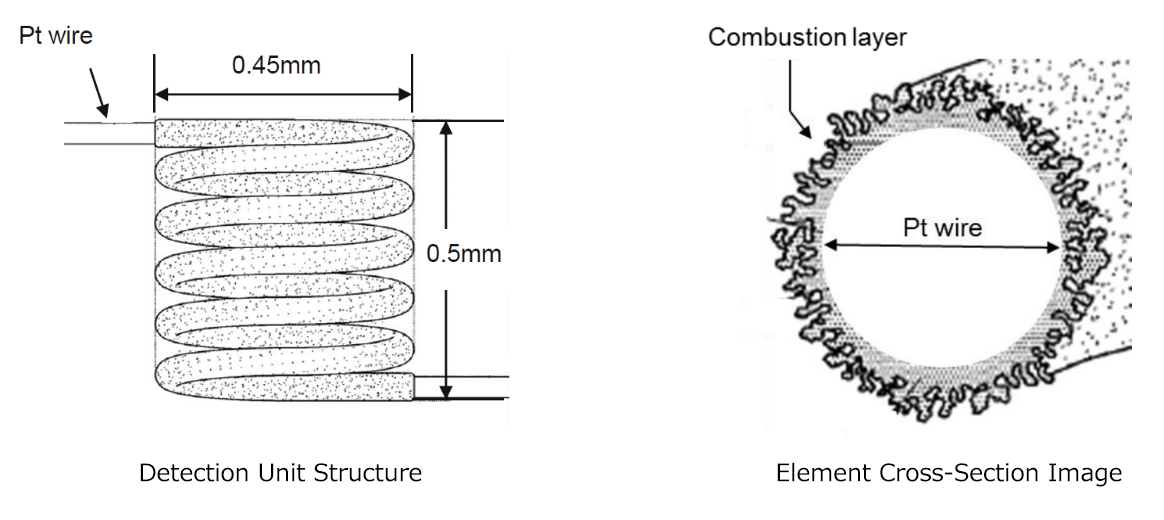
This innovative design creates a sensing layer with a large surface area while minimizing the element size, enabling fast startup and response combined with improved durability against siloxane poisoning.
Catalytic Combustion Type Hydrogen SensorsEnd-to-End Support: From Sensor to Analyzer
We offer comprehensive solutions, including individual sensors, sensor modules, and fully integrated gas analysis systems:
Breath analysis (e.g., alcohol, halitosis)
Crop freshness monitoring
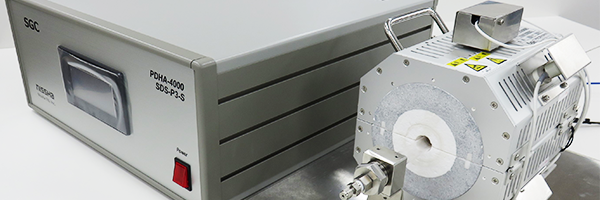
Hydrogen concentration measurement for metal degradation diagnosis