
AlphaMatte* is one of the decorative films in the Nissha SurfaceWorks portfolio. Its key feature is the ability to simultaneously create distinctive surface patterns and tactile sensations, enabling a wide variety of design expressions. Particularly in woodgrain designs, AlphaMatte can recreate the texture and dimensionality of real wood, adding greater depth and richness to the overall appearance. It has also earned high praise from customers for its ability to achieve sophisticated design effects through selective matte finishes applied directly to the film, without relying on mold texturing.
*AlphaMatte is a trademark or registered trademark of Nissha Co., Ltd.
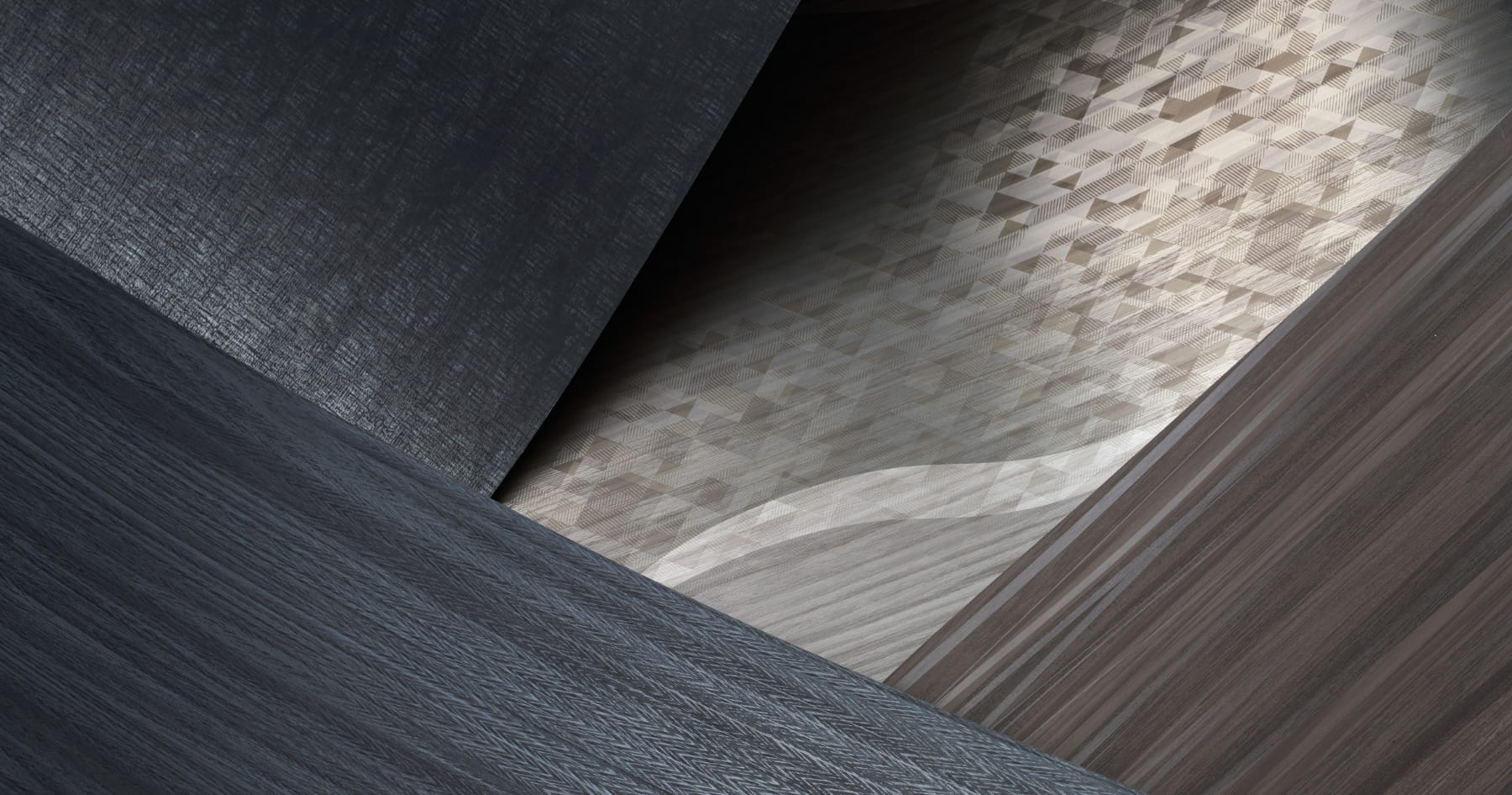
Nissha continues to pursue new possibilities in design expression while building on these technologies.
For this interview, members involved in the development of a new decorative film technology with an even richer tactile feel, featured in SENSE 3, shared their insights.
How are Nissha’s new technologies born? This interview explores the people and processes behind the development of this latest innovation.
Explore the Design & CMF sample books
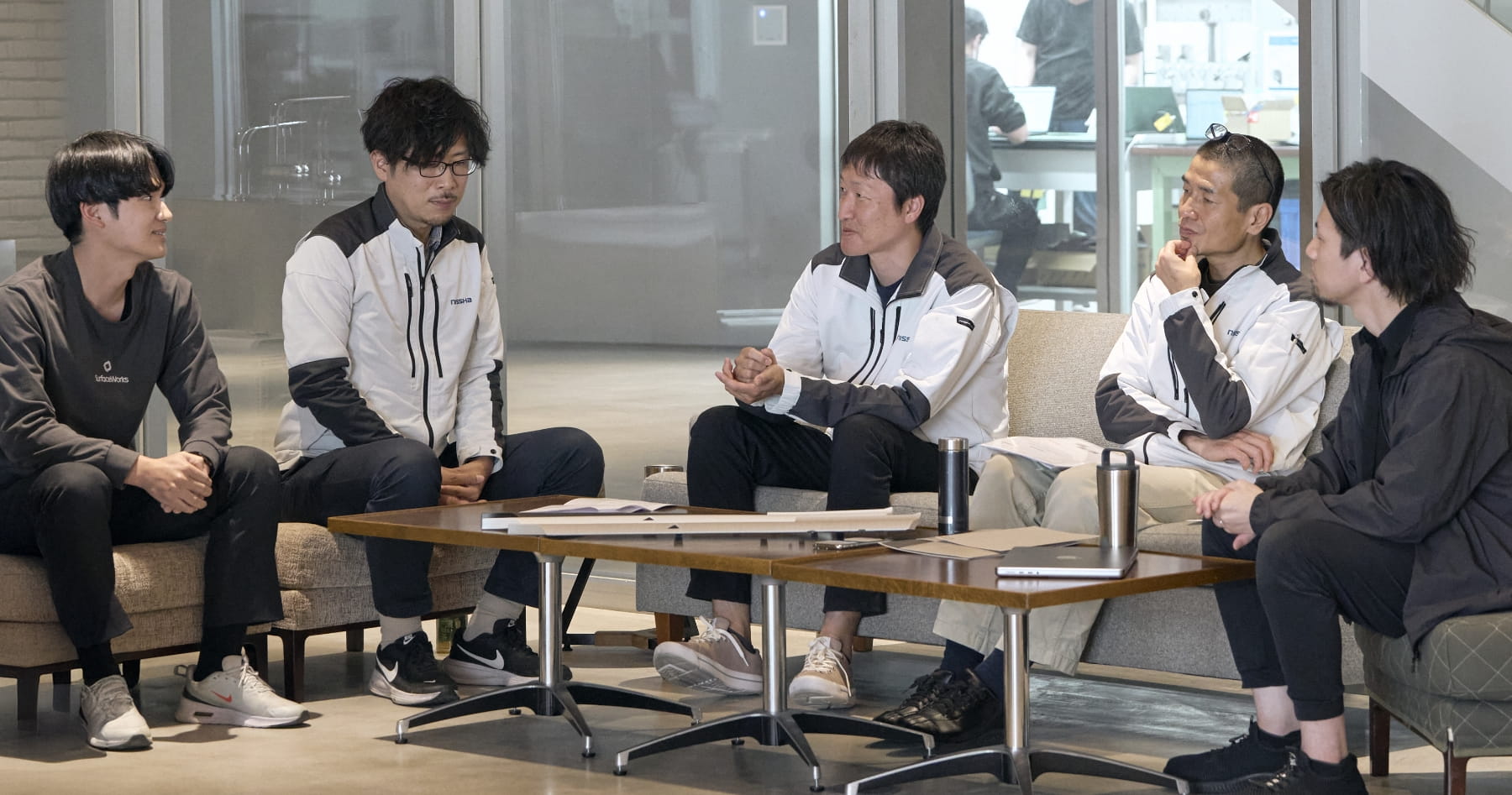
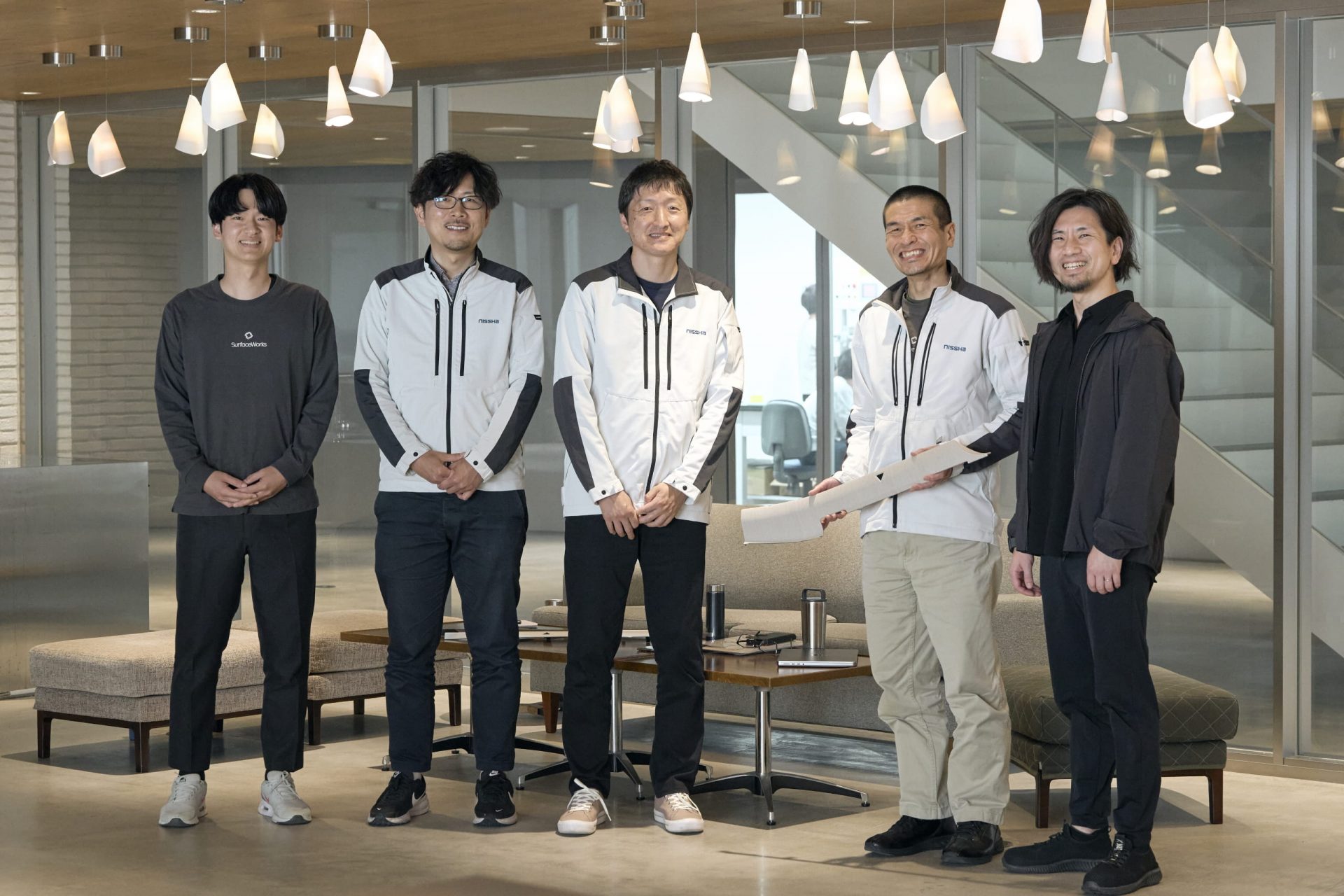
Interviewees (from right to left)
Members of the Industrial Materials Business Unit, Nissha Co., Ltd.
Tomonori Tsurutani
Chief Supervisor, Design & CMF, Business Strategy Marketing, Mobility Team Leader
Hisashi Hara
Project Manager
Senior Manager, Sales and Customer Relationship Management
Takuya Yoshinaga
Chief Supervisor, Product Design and DR, Product Design & Engineering
Hikaru Nishigaki
Film Design/Mobility, Product Design & Engineering
Jun Matsumoto
Chief Supervisor, Technology and Business Development
— Was there a moment when the team realized that further advances beyond AlphaMatte would be needed?
Hara, Project Manager (hereinafter “Hara”): I work with customers in China, and around 2024, I began hearing from our local sales team there that customers were looking for an even higher level of tactile sensation. At the same time, we learned that competing companies were introducing technologies capable of delivering such effects. Those developments gave me a sense of urgency, as I felt that AlphaMatte might no longer be enough to win new business.
Matsumoto: While I shared that sense of urgency, from a development perspective, I wasn’t entirely convinced at first. I wondered whether this was truly what the market needed. However, after visiting overseas trade shows and seeing market trends firsthand, I became convinced that there was real demand for it.
Tsurutani: Actually, technologies capable of creating this level of tactile sensation had existed before. The challenge was that the tactile effect tended to be reduced during the molding process.
We didn’t want to leave that challenge unsolved. We believed that continued refinement could help us better meet our customers’ expectations.
Nishigaki: We felt there was a limit to what could be achieved through printing methods and ink improvements alone. That led us to revisit an earlier approach in which tactile sensations were created by adding surface texture directly to the film. As we thoroughly reevaluated previously used materials and design specifications, we found that even very small differences in materials could significantly affect the results.
One of the challenges was determining the performance level needed for commercialization while continuing to refine the technology.
In the early stages, the team gathered around prototype samples and discussed which tactile qualities felt most appealing and which would be most highly valued by customers. We also gathered input from our overseas sales teams. Based on those discussions and evaluations, we determined the level of quality required for commercialization.
— What ultimately convinced you that this was ready to be introduced to customers?
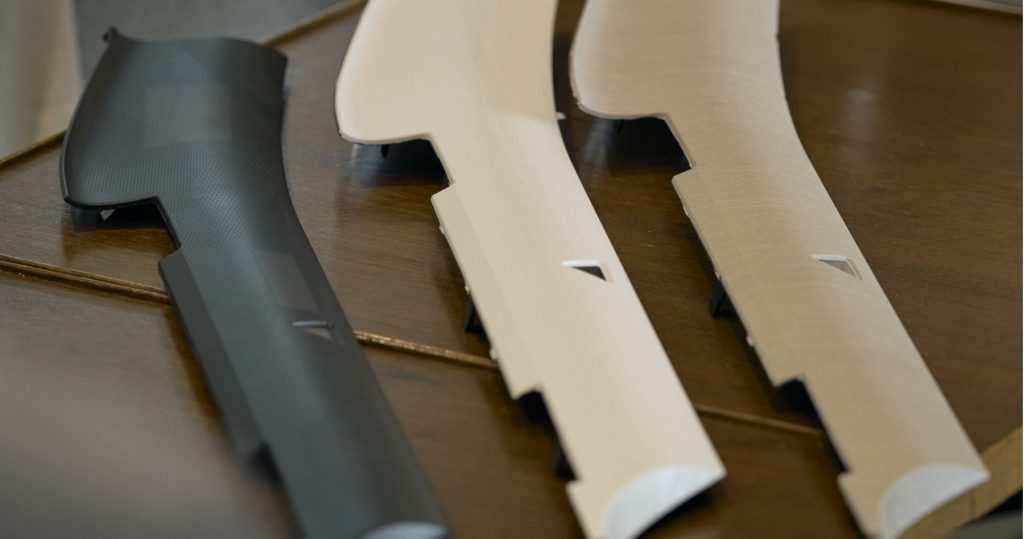
Hara: One of the biggest factors was receiving feedback from an automotive manufacturer’s molding facility, one of our customers, that the product could be manufactured at production scale. If the film cannot be molded at a customer’s facility, it simply has no practical value. What gave us confidence was that, after molding, the samples still retained a tactile feel that met our target standards. At that point, I felt we had something we could actively propose to customers.
Nishigaki: As part of establishing the design specifications, we conducted molding evaluations at a customer’s facility and received positive feedback that the textured surface created in the Rich tactile feel decorative film was retained to a sufficient degree after molding. Customer satisfaction is essential for establishing a viable design, so this evaluation process was particularly important.
At the same time, I felt that receiving more customer inquiries going forward would give us valuable opportunities to further refine and improve the quality of the product. That’s why I approached Tsurutani-san, the director of the sample book, and encouraged him to move forward with introducing it.
Tsurutani: The people who see our products, whether molding companies, automotive manufacturers, or end users driving the finished vehicles, experience them as completed parts. If the quality isn’t there at that stage, the value of the technology cannot be fully realized.
We can propose concepts all day long. However, if we raise customers’ expectations only to stop at the concept stage, we end up disappointing them.
In this project, we were able to create samples that had reached a level suitable for practical customer use. Members of the engineering team also began saying, “We should definitely include this in the sample book,” and “This is something we should actively introduce to customers.”
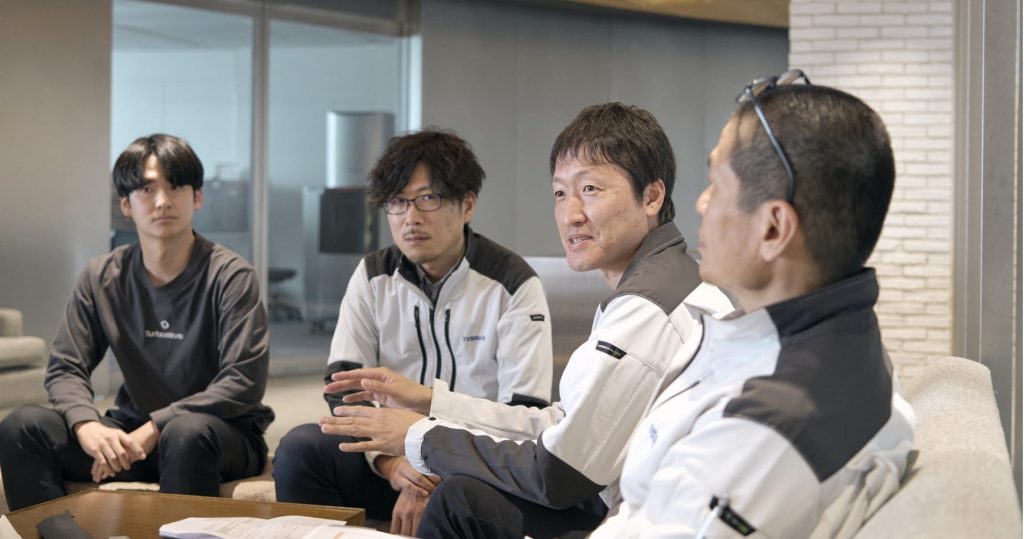
Yoshinaga: I think this Rich tactile feel decorative film project was somewhat unique. When people from different functions, such as sales and design, come together, there is often a gap in perspective or priorities. At times, one department moves ahead on its own, making collaboration difficult and leading to situations where people feel they are no longer speaking the same language or understanding each other’s intentions. When that happens, projects can lose momentum.
This time, however, everyone shared the same understanding and goals. My honest impression was that there was simply no reason to stop the project.
Tsurutani: I think a key factor was that everyone understood why certain approaches would not work and what was needed to achieve a better result. Without that shared understanding, it would have been difficult to move forward at this pace.
By working together as a single team, sharing a clear technical goal and contributing ideas from different perspectives, we were able to reach this point.
It may seem as though we simply happened to be assigned to this project, but in reality, there is hardly a product in this division that doesn’t involve someone from our department. I’d like to see more initiatives like this so that we can continue creating even better products.
Even after the project was completed, the relationships built through this collaboration remained. I feel the connections between team members have become stronger, and cross-functional collaboration within the organization has deepened as well.
— What principles have you considered most important throughout the development process? And conversely, are there any aspects that have changed over time?
Matsumoto: Because this was an entirely new manufacturing process, I initially wondered whether it might compromise some of the unique design expressions that Nissha has developed through its printing-based technologies.
At the same time, however, it also opened up possibilities for expressions that could only be achieved through this process. I felt that we could create new value through the manufacturing method itself, including unique surface textures that cannot be produced in any other way, while preserving Nissha’s strength in design expression.
Nishigaki: When it comes to what must be protected, quality is always the top priority. There are many different ways to ensure quality, whether by defining numerical targets or establishing robust processes. What we continue to explore is how to secure a stable operating range that enables us to maintain consistent quality while working within various constraints.
Tsurutani: This may seem obvious to those involved in development and engineering, but if you were to count all the possible ink formulations, the number of combinations the team has tested would probably be staggering.
And it doesn’t stop once a formulation has been developed. They also assess how the film performs after molding and how its properties change along the way.
Their thorough understanding of the entire production process enables a stable supply. And because they consistently maintain quality, we on the design side are able to work with a greater degree of creative freedom.
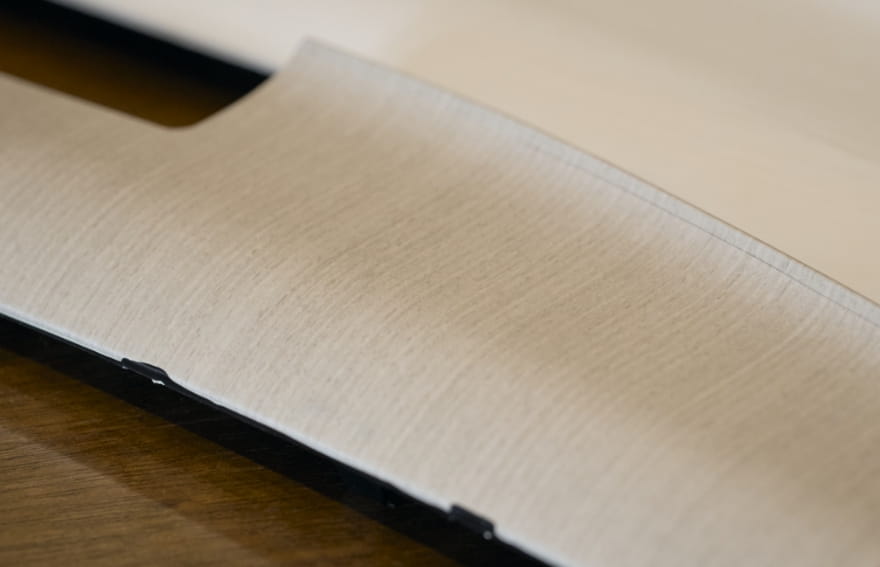
Rich tactile feel decorative film with tactile characteristics retained after molding
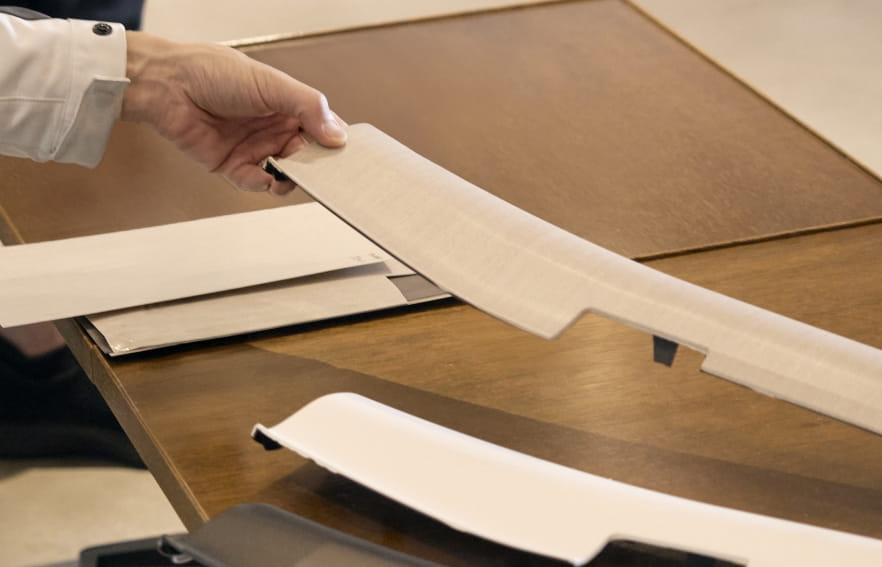
Comparative evaluations with other manufacturing methods are conducted jointly by the sales, development, and design teams
— Do you ever have to make compromises in order to achieve mass production?
Nishigaki: To be honest, I don’t really think of mass production in terms of making compromises. Of course, there are limits to what can be achieved, but I approach my work with the goal of delivering what our customers are looking for at the highest possible standard within the constraints of QCD*.
*QCD: A framework consisting of Quality, Cost, and Delivery, used to balance product quality, cost efficiency, and delivery schedules.
Matsumoto: Tactile finishes may be a major trend today, but that trend could disappear in two or three years. Our goal is to bring a product to market once it has reached a satisfactory level, before the opportunity passes, and then continue refining and developing it over time.
Tsurutani: Once the film design has been firmly established, we may be able to respond to changing trends simply by modifying the surface design or texture pattern.
The development of this technology has shown that previous manufacturing methods do not necessarily become obsolete, but can instead evolve and serve as the foundation for new approaches. In that sense, I think we are doing our best as we move forward while continuing to pursue the ideal together.
Hara: Just as Nissha is a manufacturer, so are our customers. As long as we are manufacturers, our responsibility is not only to develop products but also to mass-produce them, deliver them to customers, and generate value through them. I believe the job is only truly complete once we reach that point.
Rather than thinking in terms of compromise, I believe it is important to maintain a willingness to find common ground. That is what allows us to create products that balance manufacturability with appeal. At the same time, we should never regard that as the finish line. It is important to continue refining and improving our products day by day in pursuit of something even better.
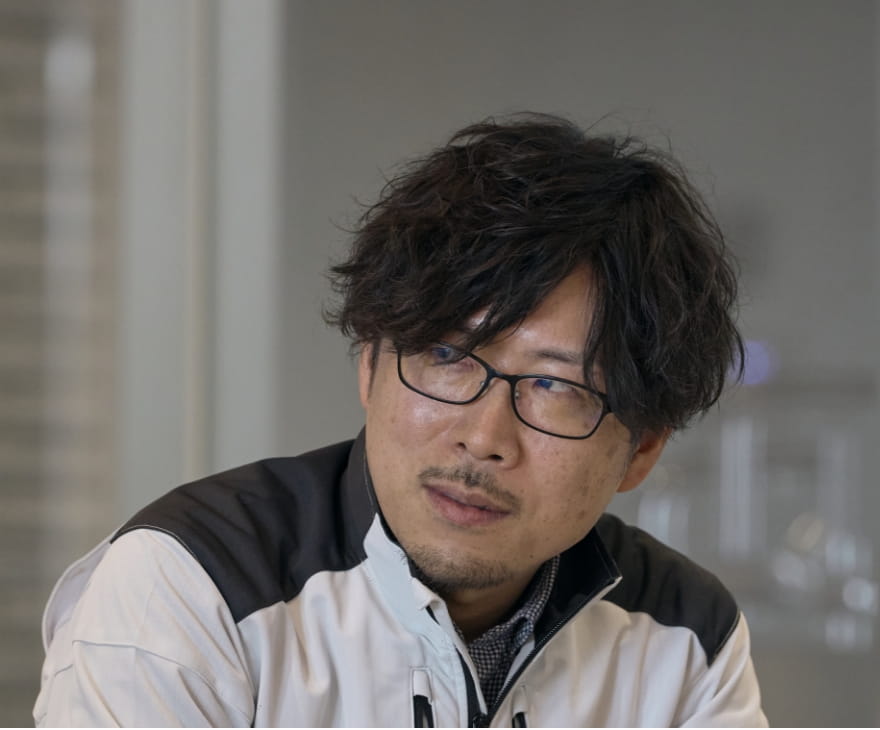
Hikaru Nishigaki: Film Design/Mobility, Product Design & Engineering
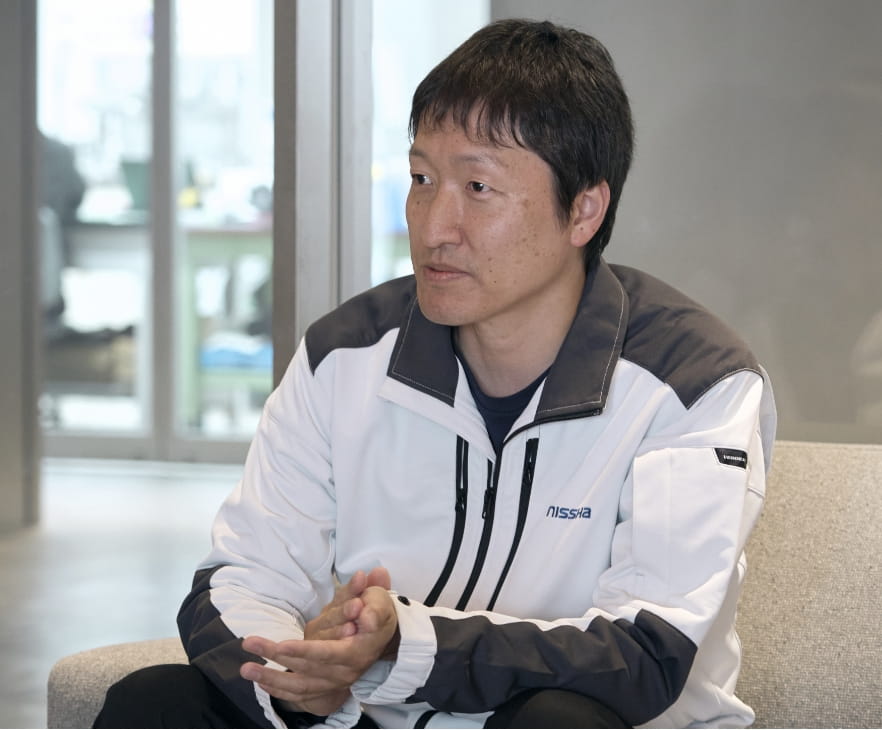
Takuya Yoshinaga: Chief Supervisor, Product Design and DR, Product Design & Engineering
Yoshinaga: That is actually quite a difficult question. The word compromise often carries the impression of giving something up, but I see it more as identifying what is truly necessary.
I think everyone involved views the project through a different lens. If the goals and expectations are aligned properly from the outset, then there should be no need for compromise at the very end of the process.
— What do you think defines “Nissha”?
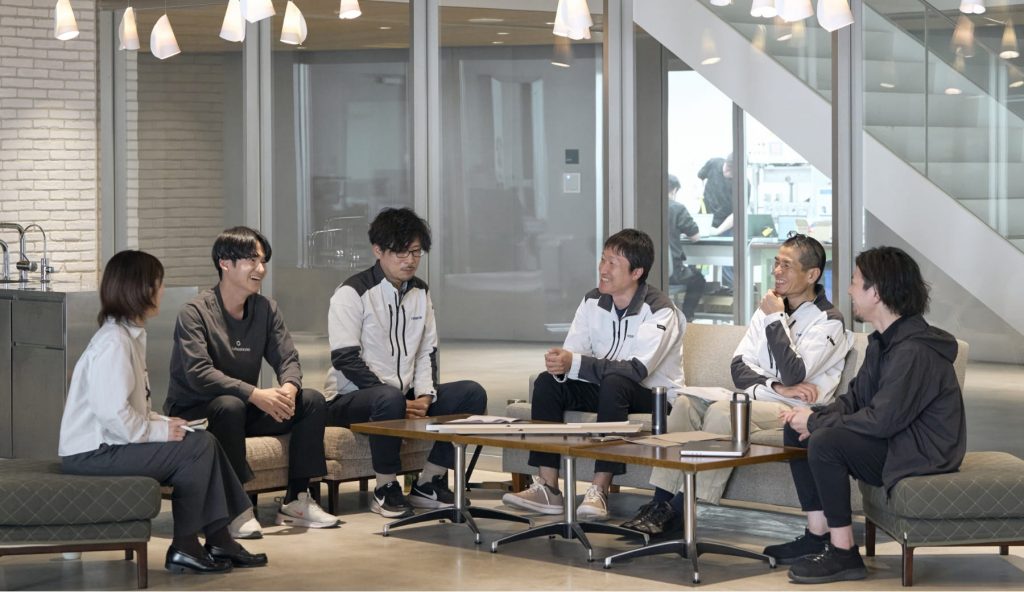
Tsurutani: One thing I have noticed is that, even in a company with so many employees, there are many initiatives that seem to depend on the unique expertise of a particular person.
To be honest, part of me sometimes wonders what would happen if a particular person were no longer here. At the same time, the level of individual performance is remarkably high. What feels uniquely Nissha to me is the way those individual strengths come together and create something much greater. It is not simply a matter of addition. It is about how those strengths can multiply one another. I think Nissha is the kind of company where that can happen.
Nishigaki: I would say it is the openness of the culture. Even outside of formal meetings, we can easily approach one another for technical insights, and people are always willing to take the time to talk.
Because everyone deeply understands the importance of maintaining quality and improving efficiency, communication tends to be very smooth and ideas are shared quickly.
Matsumoto: In addition, we can openly exchange ideas not only with colleagues in Japan but also with team members overseas. That gives us a strong sense of global teamwork.
I think what makes Nissha unique is the system and collaborative environment that enable us to develop products that can compete with those of local manufacturers around the world while continuously driving the PDCA* cycle with speed and agility, regardless of geographical distance.
*PDCA: A continuous improvement framework consisting of Plan, Do, Check, and Action.
Yoshinaga: I think one of the ideas deeply rooted in Nissha’s culture is that people do not immediately say “no” or “it can’t be done.”
When developing something new, setbacks are inevitable. However, what helps us overcome those challenges is the mindset of asking, “How can we solve this?” rather than accepting defeat. I strongly believe that way of thinking is at the heart of what makes Nissha, Nissha.
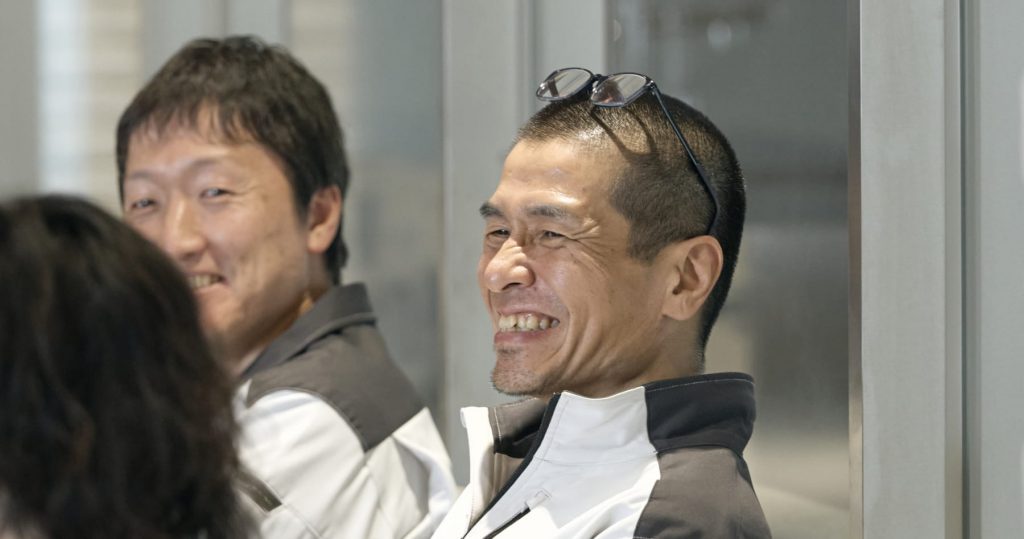
Hara: At the end of the day, work is always accomplished as a team.
In addition to the people gathered here, bringing a product to market involves many others, including manufacturing teams, quality specialists, and suppliers. It takes the support and cooperation of a wide range of people.
What feels most like Nissha to me is that everyone is always willing to help and work together. I have been with Nissha for 28 years, and I have never seen a project that received an order but ultimately had to be abandoned because mass production could not be achieved.
There are certainly difficult moments and challenges along the way, but people come together, support one another, and see things through to the end. Working on this project reminded me of that once again.
By identifying the value customers truly need and evaluating ideas from multiple perspectives, we refine and elevate them to a level of quality that is ready to be proposed to customers.
The expressive technologies of Nissha SurfaceWorks are shaped by the accumulation of collaboration across departments and disciplines.
If you are interested in the expressive technologies of Nissha SurfaceWorks, including Rich tactile feel decorative films and AlphaMatte, please feel free to contact us.