- Graphic Design for Medical Device Surface
Nissha’s In-mold Decoration technologies, IMD and IML, transfer printed layers onto molded surfaces or insert multi-color printed films during molding. As illustrated below, molded parts produced using IMD and IML achieve a high level of design quality in cover components.
IMD and IML Enabling Diverse Design Possibilities
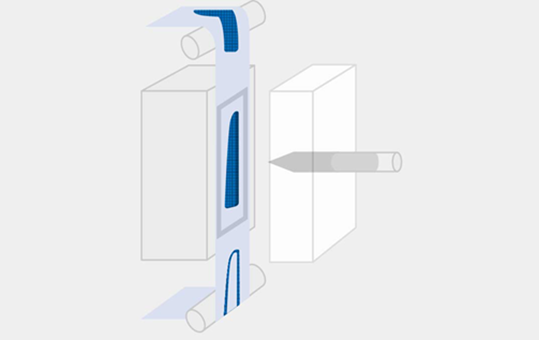
Nissha’s IMD and IML are in-mold decoration technologies in which a decorative film is placed inside the mold, enabling surface decoration of molded parts to be completed simultaneously with injection molding.
-
IMD(In-mold Decoration)
A technology that transfers only the printed layer from a decorative film onto the surface of molded parts. With IMD, molding and decoration are performed in a single process.
-
IML(In-mold Labeling)
A technology in which a decorative film is inserted into the surface of molded parts. IML allows decorative films to be applied to molded parts with deep or complex geometries.
- *IMD and IML are registered trademarks of Nissha Co., Ltd.
- *IMD is an abbreviation for “In-mold Decoration” and is a proprietary term coined by Nissha to describe a technology in which decoration and molding are performed simultaneously using transfer foil within an injection mold. IML is an abbreviation for “In-mold Labeling.”
-
-
- Resin type
- Moldable resins include PS, PP, ABS, acrylic, PC, and other commonly used thermoplastic resins.
Based on customer resin requirements, we evaluate and determine the most suitable processing conditions.
-
-
-
- Vacuum Forming of Plastic Films
- In addition to injection molding, we offer vacuum forming for plastic films.
We have experience in vacuum forming plastic films such as acrylic, ABS, and PP.
-
Graphic design also plays an important role in medical settings
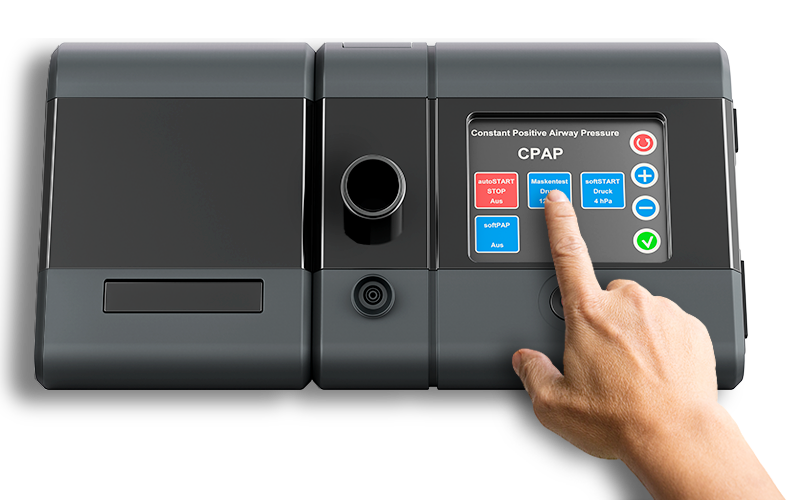
Cover panels for medical devices are typically designed with a simple appearance.
They are often molded from single-color, light-colored resins, and switches and product logos are usually printed in a single color such as black or blue. For the following two reasons, we believe that a greater diversity of graphic design is important for medical device cover panels.
Reducing Operational Errors Through Intuitive Design
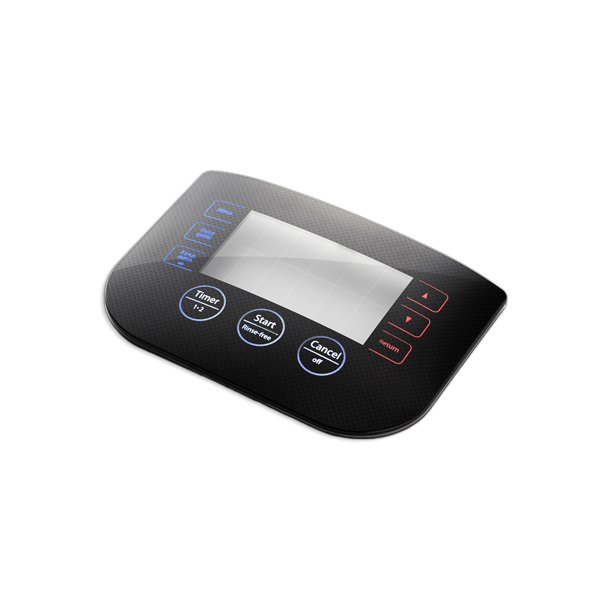
When operation buttons are printed in a single color, they tend to look identical. This can make it difficult to distinguish between different functions and may increase the risk of pressing the wrong button.
Color-coding buttons by function offers a clear alternative. Panels with multi-color printing make controls easier to recognize at a glance and can help improve operational safety.
Brightening the Medical Environment
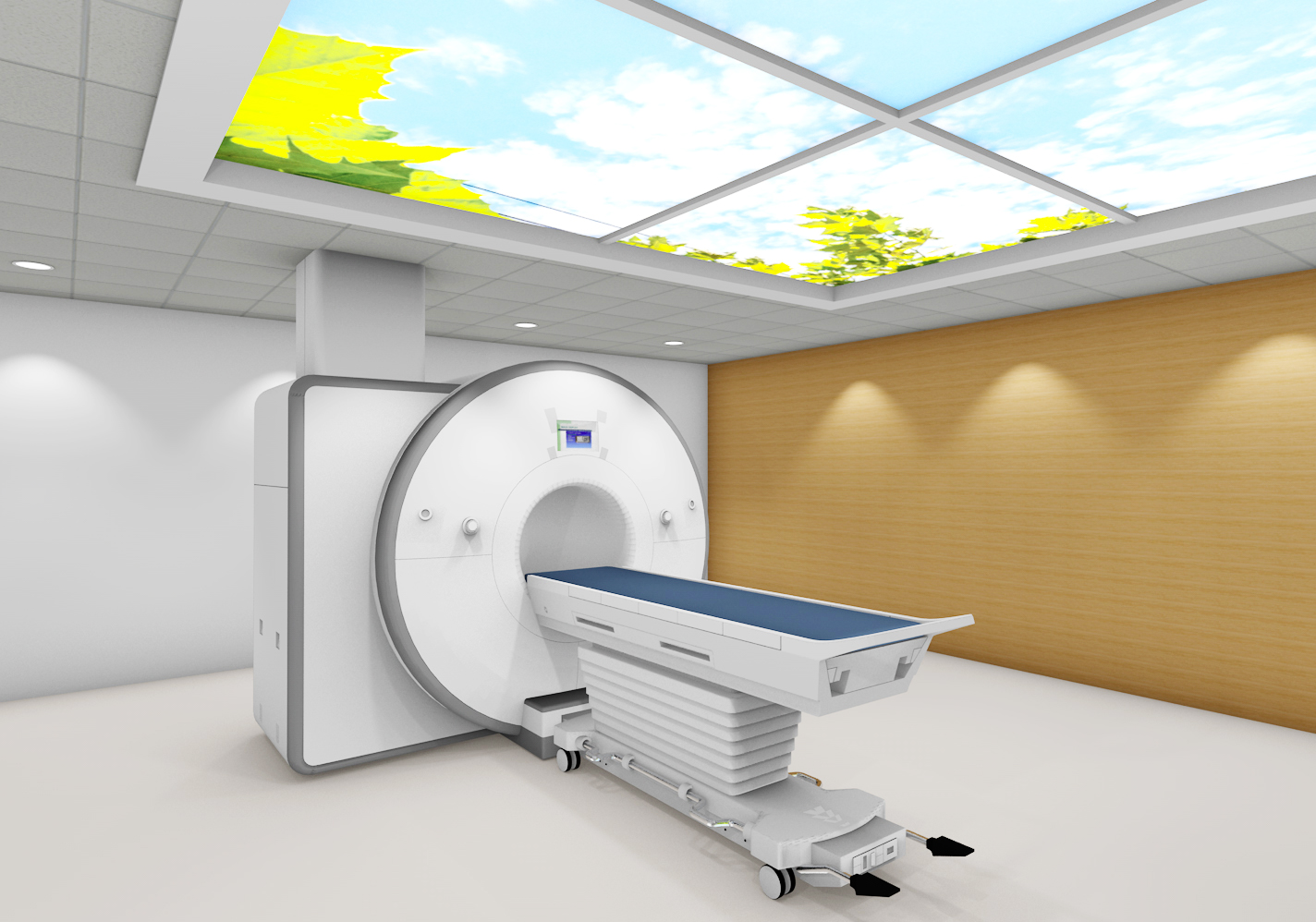
Hospitals serve not only as places of treatment, but also as living and working environments for healthcare professionals and long-term patients. When dominated by sterile, impersonal equipment, these spaces can unintentionally contribute to psychological stress.
This has led to growing interest in design-led approaches, such as animal-themed IV stands and sky-inspired ceiling designs in CT rooms, that help create more welcoming, human-centered environments.
IMD and IML technologies enable graphic design to be seamlessly integrated into medical devices, opening new possibilities for more comfortable and reassuring medical environments.
Medical Device Manufacturing Case Studies and Application Examples
We welcome inquiries regarding medical device designs
Column
List



Inquiries about design development/
manufacturing of medical devices
Please feel free to contact us about medical devices
Contact US