Vascular catheters are essential medical devices used in a wide range of diagnostic and therapeutic procedures. Available in a variety of designs to meet specific clinical applications, they play a critical role in modern patient care. This article provides an overview of vascular catheters, their primary uses, and major types.
What Are Vascular Catheters?
A vascular catheter is a flexible hollow tube inserted into a blood vessel for diagnostic and therapeutic procedures. Made from materials such as nylon, silicone, and fluoropolymers, it can be used to measure pressure and flow, collect blood or other bodily fluids, and assist in a variety of clinical interventions. Available in a wide range of sizes and configurations, vascular catheters are designed for specific clinical applications.
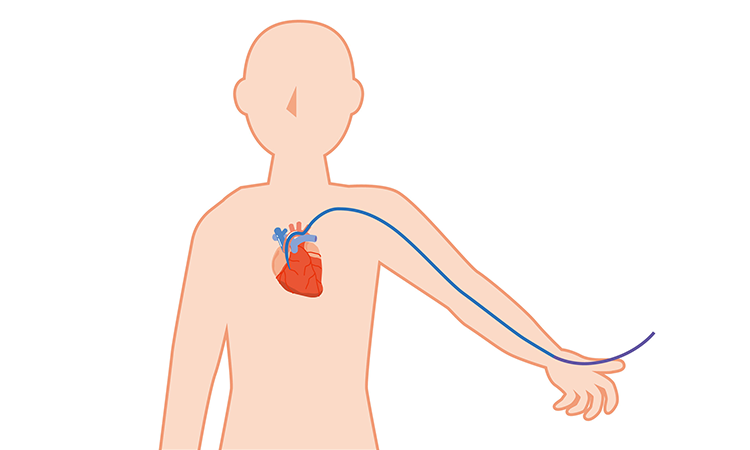
A common example is the cardiac catheter, which is guided through an artery in the leg or arm to the coronary arteries. It can be used to deliver medication or perform balloon angioplasty without the need for open-chest surgery. These minimally invasive procedures can help reduce the physical and economic burden of surgery.
Primary Applications for Vascular Catheters
Vascular catheters are used in a wide range of diagnostic and therapeutic procedures, including angiography, percutaneous transluminal coronary angioplasty (PTCA), transcatheter aortic valve implantation (TAVI), and catheter ablation. These procedures enable rapid diagnosis and minimally invasive treatment while allowing the precise delivery of drugs and medical devices to target sites, contributing to patient recovery.
The following sections highlight the primary clinical applications.
Angiography
Angiography is an imaging technique that utilizes a catheter and contrast media to visualize blood vessels under X-ray fluoroscopy. A catheter is advanced through the femoral or radial artery to the target lesion, where a balloon catheter is inflated to widen the affected vessel.
Because the procedure does not require open-chest surgery, it offers a minimally invasive alternative to conventional surgery and may help reduce patient burden and hospitalization time.
PTCA is an established treatment for coronary artery disease and remains a key component of modern cardiovascular care.
Percutaneous Transluminal Coronary Angioplasty (PTCA)
PTCA is a catheter-based procedure used to treat coronary artery narrowing. A catheter is advanced through the femoral or radial artery to the target lesion, where a balloon catheter is inflated to widen the affected vessel.
Because the procedure does not require open-chest surgery, it offers a minimally invasive alternative to conventional surgery and may help reduce patient burden and hospitalization time.
PTCA is an established treatment for coronary artery disease and remains a key component of modern cardiovascular care.
Transcatheter Aortic Valve Implantation (TAVI)
TAVI is a catheter-based procedure that replaces a diseased aortic valve with a prosthetic valve.
Catheters are guided to the heart through blood vessels in the neck, beneath the collarbone, or in the groin. Electrophysiological measurements are then performed to identify the source of arrhythmia. Once identified, the tissue is ablated using radiofrequency ablation or cryoablation.
Catheter ablation is typically performed under local anesthesia and is commonly used in the management of atrial fibrillation, paroxysmal supraventricular tachycardia, and other cardiac arrhythmias.
Catheter Ablation
Catheter ablation is a treatment for cardiac arrhythmias. During the procedure, radiofrequency energy or cryotherapy is used to eliminate tissue responsible for abnormal electrical activity in the heart.
Catheters are guided to the heart through blood vessels in the neck, beneath the collarbone, or in the groin. Electrophysiological measurements are then performed to identify the source of arrhythmia. Once identified, the tissue is ablated using radiofrequency ablation or cryoablation.
Catheter ablation is typically performed under local anesthesia and is commonly used in the management of atrial fibrillation, paroxysmal supraventricular tachycardia, and other cardiac arrhythmias.
Types of Vascular Catheters
Vascular catheters are available in a variety of types, from drug-delivery catheters to microcatheters, each suited to specific clinical applications. Below are three representative types and their key benefits.
Drug-Coated Balloons (DCB/DEB)
Drug-coated balloons (DCBs/DEBs) are balloons coated with antiproliferative drugs that are delivered to the lesion site during balloon expansion to help prevent restenosis. These devices help reduce the risk of restenosis and provide an alternative to additional stent implantation in selected cases.
Drug-Eluting Stents (DES)
Drug-eluting stents (DES) are implantable stents coated with drugs that are gradually released into the surrounding vessel tissue to suppress restenosis. Since their introduction, DES have become widely used in the treatment of angina and myocardial infarction.
DES enable local drug delivery to the vessel wall, where the released drug helps suppress neointimal proliferation. However, because thrombosis remains a potential risk, patients typically require antithrombotic therapy following implantation.
Microcatheters
Microcatheters are ultra-small devices used in percutaneous coronary intervention (PCI) for complex lesions.
Typically available with distal tip diameters of approximately 1.5–2.0 Fr and lengths of 130 cm, 135 cm, and 150 cm, they are particularly useful in retrograde approaches for chronic total occlusions (CTO). Microcatheters support guidewire manipulation and exchange, as well as the selective delivery of contrast media and therapeutic agents.
Specialized Catheter Technologies for Complex Lesions
The following specialized catheter technologies play an important role in the treatment of severe calcification, in-stent restenosis, and other lesions that are difficult to manage with conventional devices.
- Excimer Laser Catheters
- Excimer laser catheters use laser energy to remove atherosclerotic plaque and thrombotic material from blood vessels. They are used in selected cases of chronic total occlusion, bifurcation lesions, acute myocardial infarction, and in-stent restenosis.
- Rotational Atherectomy Systems
- Rotational atherectomy systems use a diamond-coated burr rotating at 150,000–200,000 rpm to modify heavily calcified lesions. The burr preferentially ablates calcified tissue while minimizing injury to elastic vessel structures, and the resulting particles are small enough to pass through the microcirculation.
- Orbital Atherectomy Systems
- Orbital atherectomy systems use a diamond-coated crown to modify calcified lesions. Depending on lesion characteristics, they may be used alone or in combination with other atherectomy technologies.
Partner with Nissha for Medical Device Manufacturing
Nissha provides contract manufacturing services for a broad range of medical devices, including single-use catheters, absorbable and non-absorbable devices, endoscopic instruments, and surgical products.
With ISO 13485-compliant quality management systems, Class 10,000 cleanroom facilities, FDA regulatory experience, and a global manufacturing network spanning more than 10 sites worldwide, Nissha delivers manufacturing and supply capabilities that support stable supply for customers around the world. From production transfer and capacity expansion to new product launches, Nissha is ready to support your next project.
For more information, please visit Nissha's Medical Device Contract Manufacturing page.